

This manual aims to inspire teachers‚ fostering inclusive practices and guiding their pedagogical journey. It empowers educators to effectively support student learning processes.
The Evolving Role of the Teacher
The contemporary teacher’s role transcends traditional instruction; it’s a dynamic process of facilitation and guidance. Modern educators are increasingly expected to be reflective practitioners‚ adapting to diverse learning needs and integrating technology effectively. This manual acknowledges this shift‚ providing support for inclusive practices and continuous professional development;
Teachers are now tasked with navigating complex issues like student mental health and responding to curriculum concerns‚ demanding a robust understanding of pedagogical strategies. The manual serves as a companion‚ offering reminders and guidance to implement effective teaching methods. It’s about empowering teachers to not just deliver content‚ but to cultivate critical thinking and lifelong learning skills in their students.
The Purpose of a Teacher Manual
A teacher manual functions as a crucial guidebook‚ authored to support educators utilizing published textbooks. Its primary purpose is to enhance pedagogical practices‚ offering detailed lesson plans and systematic responses to classroom challenges. This resource bridges the gap between curriculum intent and effective implementation‚ ensuring teachers are well-equipped to guide student learning.
Beyond simply outlining content‚ the manual provides practical tools like printouts and templates‚ facilitating thematic unit development. It’s designed to be user-friendly‚ offering guidance on integrating mental health support and navigating sensitive topics. Ultimately‚ the manual aims to empower teachers‚ fostering confidence and promoting quality education for all students‚ while addressing potential lapses in quality control.

Core Components of a Teacher Manual
Essential elements include detailed lesson plans‚ pedagogical guidance‚ alignment with NaCCA standards‚ robust assessment strategies‚ and rubrics for evaluating student progress effectively.
Lesson Plans & Pedagogical Guidance
Comprehensive lesson plans form the backbone of effective teaching‚ providing a structured framework for delivering content and achieving learning objectives. These plans aren’t merely outlines; they offer detailed guidance‚ including suggested timings‚ materials needed‚ and potential differentiation strategies.
The manual’s pedagogical guidance goes beyond simply what to teach‚ focusing on how to teach it effectively. Lessons within teacher guides provide crucial reminders and support for implementing proven pedagogical practices. This ensures teachers can consistently employ methods that maximize student engagement and understanding.
Furthermore‚ the manual emphasizes a teacher-centered approach‚ empowering the educator to guide the learning process‚ fostering reflection and critical thinking skills in students. It’s about equipping teachers with the tools to not just deliver information‚ but to cultivate a dynamic and supportive learning environment.
Alignment with Curriculum Standards (NaCCA)
This manual is meticulously aligned with the National Council for Curriculum and Assessment (NaCCA) standards‚ ensuring all content and activities contribute directly to the national curriculum goals. This alignment isn’t merely a formality; it’s a commitment to providing students with a relevant and rigorous education that prepares them for future success.
NaCCA plays a vital role in reviewing textbooks and teacher manuals‚ guaranteeing quality control and adherence to established educational benchmarks. The withdrawal of printed copies of a Senior High School teacher manual highlights NaCCA’s dedication to maintaining these standards.
The manual’s structure reflects NaCCA’s framework‚ offering teachers a clear pathway to deliver curriculum-aligned instruction. It supports educators in navigating the curriculum effectively and confidently‚ fostering a cohesive learning experience for all students.
Assessment Strategies & Rubrics
This manual provides a comprehensive suite of assessment strategies and accompanying rubrics designed to accurately measure student understanding and progress. These tools move beyond traditional testing‚ incorporating formative and summative assessments to provide a holistic view of each learner’s capabilities.
Lessons within the Teacher’s Guides offer guidance and reminders for implementing effective pedagogical practices‚ directly impacting assessment outcomes. Rubrics are specifically designed to evaluate student work against clearly defined criteria‚ ensuring fairness and consistency in grading.
The manual emphasizes the importance of using assessment data to inform instruction‚ allowing teachers to tailor their approach to meet individual student needs. This iterative process of assessment and adjustment is central to maximizing learning potential.

Inclusivity and Differentiation in Teaching
The manual champions inclusive practices‚ equipping teachers to support diverse learning needs and create equitable access to education for all students.
Supporting Diverse Learning Needs
This section of the manual provides practical strategies for teachers to effectively address the varied learning needs present in every classroom. Recognizing that students learn at different paces and in different ways is paramount. The guide emphasizes the importance of understanding individual student profiles‚ including those with learning disabilities‚ giftedness‚ or varying cultural backgrounds.
It offers guidance on adapting lesson plans‚ utilizing differentiated instruction techniques‚ and providing appropriate accommodations to ensure all students can access the curriculum. Furthermore‚ the manual highlights the significance of creating a supportive and inclusive learning environment where every student feels valued and empowered to succeed. Resources and examples are included to assist teachers in implementing these strategies effectively‚ fostering a truly equitable educational experience.
Strategies for Inclusive Practices
This manual champions inclusive classroom environments‚ detailing strategies to benefit all learners. It advocates for Universal Design for Learning (UDL)‚ proactively minimizing barriers and maximizing accessibility for diverse needs. Practical techniques include flexible grouping‚ tiered assignments‚ and providing multiple means of representation‚ engagement‚ and expression.
The guide emphasizes collaborative approaches‚ encouraging co-teaching and partnerships with special education professionals. It also stresses the importance of culturally responsive teaching‚ acknowledging and valuing students’ unique backgrounds. Strategies for positive behavior support and creating a sense of belonging are also included. Ultimately‚ this section equips teachers with the tools to foster a welcoming and equitable learning space where every student can thrive and reach their full potential.
Reflection and Self-Assessment for Teachers
This manual recognizes the crucial role of teacher self-reflection in continuous professional growth. It provides prompts and frameworks to encourage educators to critically examine their practices‚ identify areas for improvement‚ and refine their pedagogical approaches. Regular self-assessment is presented not as evaluation‚ but as a powerful tool for enhancing teaching effectiveness.
The guide suggests journaling‚ peer observation‚ and analyzing student data as methods for gaining insights into one’s teaching. It emphasizes the importance of aligning practice with stated beliefs and values. Furthermore‚ it encourages teachers to consider the impact of their instruction on diverse learners and to seek feedback from students and colleagues. This reflective cycle fosters a commitment to lifelong learning and ensures teachers remain responsive to the evolving needs of their students.

Utilizing Educational Platforms
This section explores integrating platforms like Google Classroom‚ bringing students‚ teachers‚ and learning materials into a unified digital environment for enhanced learning.
Google Classroom Integration
Leveraging Google Classroom streamlines administrative tasks‚ allowing teachers to efficiently distribute assignments‚ provide feedback‚ and monitor student progress. This platform fosters a collaborative learning environment where students can easily access resources and engage with peers. The manual will detail how to create classes‚ manage student rosters‚ and utilize features like announcements and discussion forums.
Furthermore‚ it will guide teachers in integrating other Google Workspace tools – Docs‚ Sheets‚ Slides‚ and Forms – into their lessons. Practical examples will demonstrate how to create interactive quizzes‚ collaborative projects‚ and engaging presentations. The manual emphasizes utilizing Classroom’s grading features to provide timely and constructive feedback‚ ultimately enhancing the learning experience for all students. Effective integration supports a blended learning approach‚ maximizing both in-class and out-of-class learning opportunities.
Leveraging Technology for Enhanced Learning
This section explores how technology can transform teaching practices‚ moving beyond traditional methods to create dynamic and engaging learning experiences. The manual will showcase various digital tools and resources‚ including interactive whiteboards‚ educational apps‚ and online simulations‚ to cater to diverse learning styles. Teachers will learn to curate relevant online content and integrate it seamlessly into their lesson plans.
Emphasis will be placed on responsible technology use‚ addressing issues of digital citizenship and online safety. The manual provides guidance on evaluating the credibility of online sources and promoting ethical digital behavior. It also explores how technology can facilitate personalized learning‚ allowing teachers to differentiate instruction and provide targeted support to individual students. Ultimately‚ the goal is to empower teachers to harness the power of technology to enhance student outcomes.

Specific Subject Area Guidance
This section delivers focused support for subjects like SRE and P4C‚ offering guidelines‚ lesson plans‚ and implementation strategies for teachers’ success.
Sex Relationship Education (SRE) Guidelines
These guidelines provide crucial support for SRE teachers‚ ensuring age-appropriateness and sensitivity when addressing complex topics. The manual offers detailed information regarding what is typical and appropriate at different developmental stages‚ assisting educators in navigating potentially challenging conversations with students.
It emphasizes a responsible approach to SRE‚ focusing on building healthy relationships‚ consent‚ and respect. Teachers will find guidance on delivering comprehensive sex education that aligns with ethical considerations and promotes student well-being. The resource aims to equip educators with the confidence and knowledge to address student questions honestly and accurately‚ fostering a safe and inclusive learning environment.
Furthermore‚ the SRE guidelines acknowledge the importance of cultural sensitivity and adapting content to meet the diverse needs of the student population.
Philosophy for Children (P4C) Implementation
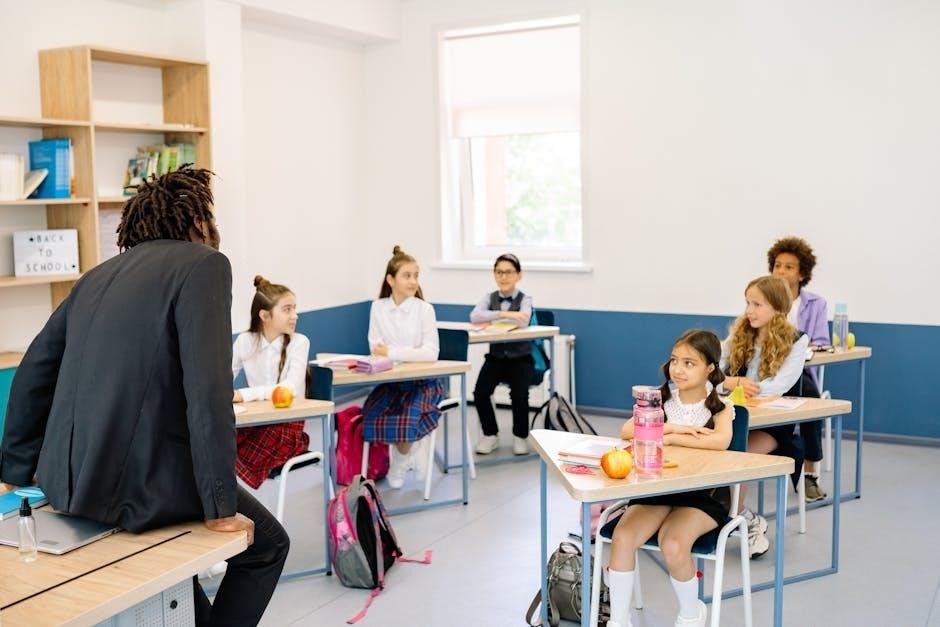
This section provides a user-friendly manual designed to seamlessly introduce Philosophy for Children (P4C) to educators working with early years and primary-aged children. It offers practical guidance and readily available resources‚ including free lesson plans‚ printouts‚ and adaptable SMARTBoard templates‚ to facilitate engaging philosophical discussions.
The manual emphasizes fostering critical thinking skills‚ encouraging students to explore complex ideas‚ and develop their reasoning abilities through collaborative inquiry. Teachers will discover strategies for creating a supportive classroom environment where children feel empowered to question‚ analyze‚ and articulate their thoughts.
Moreover‚ it supports teachers in building their own philosophical confidence and navigating potentially challenging discussions with young learners.
Addressing Contemporary Issues in Education
This section tackles crucial topics like mental health‚ psychosocial well-being‚ and controversies surrounding curriculum content‚ ensuring teachers are well-prepared and informed.
Mental Health and Psychosocial Well-being
Recognizing the increasing importance of student mental health‚ this guide provides systemic responses and integration strategies for teacher education programs. It emphasizes equipping educators with the knowledge and tools to identify students needing support and foster a positive classroom environment.
Teachers are often the first point of contact for students experiencing emotional or psychological distress. Therefore‚ understanding mental health principles and psychosocial well-being is paramount. This section offers guidance on creating trauma-informed classrooms‚ promoting resilience‚ and collaborating with school counselors and mental health professionals.
Furthermore‚ it addresses teacher self-care‚ acknowledging the emotional demands of the profession and providing resources for maintaining their own well-being. A healthy teacher is better equipped to support their students effectively.

Controversies & Quality Control (LGBTQ+ Content)
Recent controversies surrounding alleged LGBTQ+ related content in textbooks and teacher manuals highlight critical lapses in quality control processes. Dr. Peter Anti-Partey of IFEST has directly attributed these issues to insufficient oversight during the review stages.
This section addresses the need for rigorous vetting of all curriculum materials to ensure alignment with national values and educational standards. It emphasizes the importance of transparency and inclusivity‚ while also acknowledging the sensitivities surrounding potentially controversial topics.
Professor Godfred Bokpin urges the Government of Ghana and NaCCA to issue a public apology for the content concerns. This underscores the necessity for accountability and a commitment to preventing similar incidents in the future‚ alongside strengthened quality assurance protocols.
Responding to Curriculum Concerns
Effective responses to curriculum concerns are paramount for maintaining public trust and ensuring educational integrity. The recent withdrawal of Senior High School teacher manuals by NaCCA‚ alongside the Ministry of Education‚ demonstrates a reactive approach to identified issues.
Proactive measures are crucial‚ including establishing clear channels for feedback from teachers‚ parents‚ and the wider community. A robust system for addressing concerns swiftly and transparently is essential. This involves thorough investigations and‚ when necessary‚ revisions to curriculum materials.
Furthermore‚ open communication regarding changes and the rationale behind them is vital. Addressing lapses in quality control requires a commitment to continuous improvement and a willingness to acknowledge and rectify errors promptly and effectively.

The Teacher Manual as a Resource
This manual provides teachers with readily available lesson plans‚ printouts‚ and thematic unit ideas‚ supporting effective instruction and simplifying classroom preparation.
Navigating the Manual’s Structure
Understanding the organization of this teacher manual is crucial for efficient use. The manual is designed with a logical flow‚ beginning with foundational principles and progressing to specific implementation strategies. Each section clearly outlines its purpose and intended audience‚ ensuring teachers can quickly locate relevant information.
Key components‚ such as lesson plans and assessment rubrics‚ are strategically placed for easy access. A detailed table of contents and an index are provided to facilitate navigation. Furthermore‚ the manual incorporates visual cues – like headings‚ subheadings‚ and bullet points – to enhance readability and comprehension. Teachers are encouraged to familiarize themselves with this structure to maximize the manual’s utility and effectively integrate its resources into their teaching practice. Utilizing the manual’s features will streamline lesson preparation and promote consistent‚ high-quality instruction.
Utilizing Printouts and Templates
This manual provides a wealth of readily available printouts and templates designed to simplify lesson planning and classroom management. These resources include customizable lesson plan formats‚ assessment rubrics‚ and student activity sheets. Teachers can easily download and adapt these materials to suit their specific classroom needs and student learning styles.
The templates are crafted to promote effective pedagogical practices‚ aligning with curriculum standards. Printouts offer quick access to essential information‚ such as checklists and graphic organizers‚ fostering student engagement and independent learning. By leveraging these tools‚ teachers can save valuable time and focus on delivering high-quality instruction. The manual’s user-friendly design ensures seamless integration of these resources into daily teaching routines‚ enhancing overall classroom efficiency.
Thematic Unit Development
This manual champions a thematic approach to learning‚ offering guidance on crafting cohesive and engaging units that connect various subject areas. Teachers are encouraged to move beyond isolated lessons‚ fostering deeper understanding and critical thinking skills in students. The manual provides frameworks for identifying overarching themes and selecting relevant content across disciplines.
Developing thematic units allows for differentiated instruction‚ catering to diverse learning needs and interests. Resources include suggestions for integrating real-world applications and promoting student-led inquiry. By utilizing this approach‚ teachers can create a more meaningful and memorable learning experience. The manual emphasizes the importance of careful planning and assessment to ensure thematic units effectively achieve learning objectives‚ enriching the curriculum.

Quality Control and Curriculum Assessment
NaCCA plays a vital role in reviewing textbooks and manuals‚ ensuring alignment with national standards and addressing lapses in quality control effectively.
The Role of NaCCA in Textbook & Manual Review
The National Council for Curriculum and Assessment (NaCCA) holds a crucial position in safeguarding the quality and appropriateness of educational materials distributed throughout Ghana. This responsibility extends to both textbooks and teacher manuals‚ ensuring they align with the established curriculum standards and national values. NaCCA’s review process involves a thorough evaluation of content‚ pedagogical approaches‚ and overall suitability for the intended age groups.
Recent controversies surrounding alleged LGBTQ+ related content highlight the importance of NaCCA’s oversight. The swift action taken to withdraw printed copies of a Senior High School teacher manual demonstrates their commitment to addressing concerns and upholding public trust. NaCCA collaborates with the Ministry of Education to implement corrective measures and prevent future occurrences of inappropriate material reaching students and educators. Their role is not merely reactive‚ but also proactive in establishing clear guidelines and quality control protocols.
Addressing Lapses in Quality Control
Recent incidents involving inappropriate content in a Senior High School teacher manual underscore critical deficiencies in the existing quality control mechanisms. Dr. Peter Anti-Partey of IFEST directly attributes the controversy to these lapses‚ emphasizing the need for a robust and comprehensive review process. Addressing these shortcomings requires a multi-faceted approach‚ including stricter vetting procedures for all educational materials before distribution.
Furthermore‚ enhanced training for reviewers is essential to ensure they are equipped to identify potentially harmful or inappropriate content. Transparency and accountability are paramount; NaCCA and the Ministry of Education must openly acknowledge errors and demonstrate a commitment to preventing recurrence. A public apology‚ as urged by Professor Godfred Bokpin‚ signifies taking responsibility and rebuilding trust with parents‚ educators‚ and the wider community.
Public Apology & Accountability
Following the discovery of concerning content within a Senior High School teacher manual‚ a formal public apology from both the Government of Ghana and NaCCA is crucial. Professor Godfred Bokpin rightfully advocates for this step‚ recognizing its importance in restoring public trust and demonstrating genuine remorse for the oversight. Accountability extends beyond a simple apology; a thorough investigation into the quality control failures is necessary.
This investigation should identify the specific points of breakdown in the review process and assign responsibility where appropriate. Transparently sharing the findings with the public will foster confidence in the corrective measures being implemented. Furthermore‚ a commitment to preventing similar incidents in the future‚ through enhanced vetting and oversight‚ is essential for rebuilding faith in the educational system.

Future Trends in Teacher Manuals
Teacher manuals will increasingly adapt to changing landscapes‚ integrating AI and machine learning for personalized learning experiences and continuous professional development.
Adapting to Changing Educational Landscapes
The role of the teacher manual is evolving alongside rapid shifts in education. Modern manuals must move beyond static lesson plans to become dynamic resources that address emerging pedagogical approaches and societal needs. This requires a proactive approach to content updates‚ reflecting current research and best practices.
Furthermore‚ manuals need to acknowledge the increasing diversity within classrooms and provide strategies for inclusive teaching. The integration of technology‚ like Google Classroom‚ demands updated guidance for effective implementation.
Future manuals will likely incorporate more flexible formats‚ offering customizable templates and digital resources. They must also equip teachers to navigate complex issues like mental health and controversial topics‚ fostering critical thinking and responsible dialogue. Ultimately‚ the manual’s success hinges on its ability to empower teachers to thrive in a constantly changing educational environment.
The Integration of AI and Machine Learning
The future teacher manual will undoubtedly leverage the power of Artificial Intelligence (AI) and Machine Learning (ML). Imagine personalized pedagogical suggestions tailored to individual teacher needs‚ generated by analyzing student performance data and identifying learning gaps. AI could automate administrative tasks‚ freeing up educators to focus on direct student interaction.
ML algorithms can curate relevant resources‚ adapting to evolving curriculum standards and research findings. Manuals could incorporate AI-powered assessment tools‚ providing instant feedback and identifying areas for improvement.
However‚ ethical considerations are paramount. Manuals must guide teachers on responsible AI implementation‚ ensuring data privacy and avoiding algorithmic bias. The goal isn’t to replace teachers‚ but to augment their capabilities‚ creating a more effective and equitable learning experience for all students.
Continuous Professional Development
The teacher manual must champion ongoing professional growth. Education is a dynamic field‚ demanding continuous learning and adaptation. Manuals should not be static documents‚ but rather living resources‚ updated regularly to reflect best practices and emerging research.
Integration with online learning platforms is crucial‚ offering teachers access to webinars‚ workshops‚ and peer-to-peer learning communities. The manual can guide teachers through relevant professional development opportunities‚ aligning them with curriculum changes and individual needs.
Furthermore‚ it should encourage reflective practice‚ prompting teachers to critically evaluate their methods and seek feedback. A commitment to lifelong learning‚ facilitated by the manual‚ is essential for fostering excellence in teaching and ensuring positive student outcomes.