

Fluke 87 Manual: A Comprehensive Guide
This guide, encompassing PN 834192 and PN 676137, delivers essential documentation for technicians utilizing the Fluke 87 series multimeter, ensuring optimal performance․
The Fluke 87 is a professional-grade, true RMS multimeter renowned for its reliability and accuracy․ This manual, referencing PN 834192, serves as a comprehensive resource for understanding its functions; Designed for field service and electrical troubleshooting, the 87 offers versatile measurement capabilities․ It’s crucial for technicians needing precise voltage, current, and resistance readings․
This guide unlocks the full potential of your device, ensuring safe and effective operation․ Familiarize yourself with the provided documentation – including PN 676137 – to maximize its utility and longevity․
Understanding the Fluke 87 Series
The Fluke 87 belongs to a robust series – including the 87V and 89 Series IV – known for durability and precision․ Service manuals, like PN 676137, detail the intricacies of these models․ These multimeters are built to withstand demanding field conditions, offering reliable performance․
Understanding the series’ common features, alongside model-specific nuances, is key․ Referencing resources like TM2 (PN 834200) and TM3 provides a complete overview․ Proper maintenance, detailed in the service manuals, ensures long-term functionality․
Key Features and Specifications
Fluke 87 boasts True RMS, high accuracy, and CAT III safety ratings, detailed in manuals PN 834192 and PN 676137, for reliable measurements․
True RMS Measurement Capabilities
The Fluke 87 excels in providing True RMS measurements for both AC voltage and current, ensuring accuracy even with complex waveforms․ Unlike average-responding meters, True RMS delivers precise readings for non-sinusoidal signals commonly encountered in modern electronic systems․ This capability, thoroughly documented in the Fluke 87 Service Manual (PN 676137) and User Manual (PN 834192), is crucial for reliable troubleshooting and analysis․
True RMS accurately calculates the heating value of AC signals, vital for electrical safety and power measurements․ The series IV meters, including the 87, are specifically designed to handle these complex readings effectively․
Accuracy and Resolution
The Fluke 87 multimeter boasts impressive accuracy and resolution, critical for precise electrical measurements․ Detailed specifications are outlined within the Fluke 87 User Manual (PN 834192), defining the meter’s performance limits across various ranges and functions․ Achieving reliable results requires understanding these specifications, ensuring measurements fall within acceptable tolerances․
The resolution, indicating the smallest detectable change, contributes to the meter’s overall precision․ Referencing the service manual (PN 676137) aids in calibration and maintaining optimal accuracy over time․
Safety Ratings (CAT III)
The Fluke 87 is designed with safety as a priority, holding a CAT III safety rating․ This signifies the meter is suitable for use in measurement categories involving fixed loads, such as distribution panels․ To avoid electrical shock, always remove test leads and input signals before opening the case or replacing batteries/fuses – a crucial warning detailed in PN 676137․
Understanding CAT ratings is vital for safe operation; the service manual provides comprehensive guidance on maintaining this safety level․

Getting Started: Basic Operation
Begin by familiarizing yourself with the user manual (PN 834192) to properly power on/off and select measurement modes for accurate readings․
Powering On and Off
To initiate operation with your Fluke 87 multimeter, simply rotate the rotary dial from the ‘OFF’ position to any measurement function․ This action automatically powers on the device, preparing it for immediate use․ Conversely, to conserve battery life or when the instrument is not in use, rotate the dial back to the ‘OFF’ position․
Remember to always remove test leads and any input signals before powering off, adhering to basic maintenance warnings to avoid potential electrical shock or personal injury․ Proper powering on and off procedures contribute to the longevity and safe operation of your Fluke 87․
Selecting Measurement Modes
The Fluke 87 offers versatile measurement capabilities, accessed via its rotary dial․ Rotate the dial to select desired functions like Voltage (AC/DC), Current (AC/DC), Resistance, Continuity, or Diode Test․ Each selection prepares the multimeter for specific measurements, optimizing accuracy and display readings․
Ensure the test leads are connected to the appropriate input jacks based on the chosen mode․ Familiarize yourself with the dial positions to efficiently navigate between measurement types, unlocking the full potential of your Fluke 87 for diverse electrical testing applications․
Understanding the Display
The Fluke 87’s display presents crucial measurement data and status indicators; Primary readings occupy the main display area, showing the measured value with appropriate units․ Additional icons indicate selected functions, input terminals, and measurement ranges․
Pay attention to annunciators for features like Auto Hold, Min/Max recording, and relative mode․ A low battery indicator alerts you to replace the battery promptly․ Understanding these display elements ensures accurate interpretation of readings and efficient operation of your multimeter․

Detailed Measurement Functions
The Fluke 87 expertly measures voltage (AC/DC), current (AC/DC), resistance, continuity, and performs diode tests, providing versatile troubleshooting capabilities for technicians․
Voltage Measurement (AC/DC)
The Fluke 87 excels in both AC and DC voltage measurements, crucial for diverse electrical applications․ Accurate readings are paramount, and this multimeter delivers reliable results for professionals․ Understanding the input impedance is key for precise measurements, minimizing circuit loading․ Always select the appropriate range for optimal resolution and safety․ The user manual (PN 834192) provides detailed guidance on proper technique, including considerations for high-voltage scenarios and potential sources of error․ Remember to observe safety precautions when working with live circuits, removing test leads before opening the case or replacing components, as highlighted in PN 676137․
Current Measurement (AC/DC)
The Fluke 87 accurately measures both AC and DC current, essential for diagnosing electrical issues․ Proper fuse selection is critical; service manual PN 676137 emphasizes replacing fuses with the correct rating to avoid damage or personal injury․ Always break the circuit before connecting the ammeter in series․ Manual PN 834192 details the correct procedure, stressing the importance of avoiding direct connections across voltage sources․ Understanding input impedance helps minimize circuit disturbance․ Prioritize safety – remove test leads before case access, as warned in the service documentation․
Resistance Measurement
The Fluke 87 provides accurate resistance measurements, crucial for component testing and circuit analysis․ Ensure the circuit is de-energized before measuring resistance to prevent damage to the meter or inaccurate readings․ Service Manual PN 676137 cautions against live measurements․ Manual PN 834192 details selecting the appropriate range for optimal resolution․ Lead resistance can affect low-resistance measurements; relative mode can compensate․ Always note that internal resistance of the meter can influence readings, particularly in high-resistance circuits․
Continuity Testing
The Fluke 87’s continuity function quickly verifies closed circuits, essential for troubleshooting wiring and connections․ A beep indicates a low resistance path, typically below 30 ohms․ Remember to de-energize the circuit before testing continuity, as highlighted in Service Manual PN 676137, to avoid damaging the meter․ Manual PN 834192 details proper lead connection for accurate results․ This feature is invaluable for identifying broken wires, short circuits, and faulty switches, streamlining repair processes․
Diode Test
The Fluke 87’s diode test function assesses diode functionality by applying a forward voltage and measuring the voltage drop․ A healthy diode exhibits a forward voltage drop, typically between 0․5V and 0․8V, as detailed in PN 834192․ An open or shorted diode indicates a failure․ Service Manual PN 676137 emphasizes de-energizing the circuit before testing․ This test helps identify faulty semiconductors, crucial for electronic repair․ Proper lead polarity is vital for accurate readings, ensuring correct diode assessment․

Advanced Features and Functions
The Fluke 87 offers features like Auto Hold, Min/Max recording, and Relative Mode, enhancing measurement capabilities and diagnostic efficiency, as outlined in manuals․
Auto Hold Function
The Auto Hold function on the Fluke 87 automatically freezes the display reading when the measurement stabilizes, ensuring users don’t miss rapidly changing values․ This feature is particularly useful when working in environments with fluctuating signals or when needing to view a reading without constantly monitoring the display․ It simplifies capturing stable measurements, improving efficiency and reducing the chance of misinterpreting transient data․ Manuals detail how to activate and deactivate this function, optimizing workflow for professional technicians and mechanics․ It’s a key component for accurate and reliable readings․
Min/Max Recording
The Min/Max recording feature of the Fluke 87 diligently captures the highest and lowest readings encountered during a measurement session․ This is invaluable for identifying intermittent issues, voltage drops, or peak current demands․ Technicians can easily review these extremes, gaining a comprehensive understanding of signal behavior over time․ User manuals (PN 834192) explain how to initiate and reset this function, allowing for precise data logging․ This capability enhances troubleshooting and provides critical insights into dynamic electrical systems, improving diagnostic accuracy․
Relative Mode
The Fluke 87’s Relative mode functions as a zeroing feature, displaying subsequent measurements as deviations from a chosen baseline value․ This is exceptionally useful for isolating changes in a circuit or component․ By establishing a reference point, technicians can quickly identify variations, ignoring absolute values․ User documentation (PN 834192) details activation and usage․ This mode streamlines troubleshooting, particularly when assessing resistance or capacitance, focusing solely on differences and enhancing diagnostic efficiency․
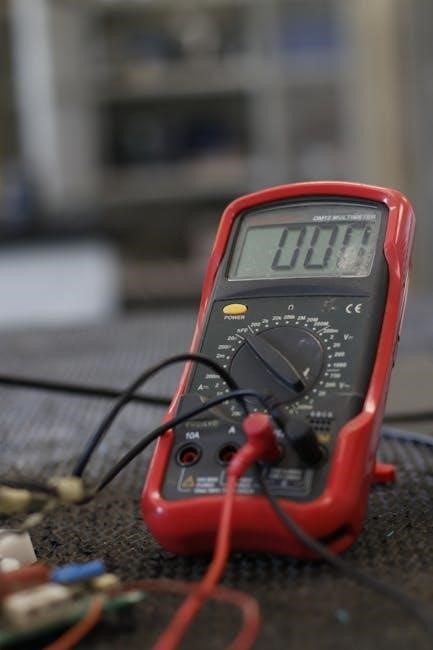
Maintenance and Troubleshooting
Regular upkeep, including battery and fuse replacement (PN 676137), ensures reliable operation; address malfunctions promptly, consulting the service manual for guidance․
Battery Replacement
Maintaining optimal performance of your Fluke 87 multimeter requires periodic battery replacement․ Before proceeding, always disconnect test leads and any input signals to avoid electrical shock or personal injury, as detailed in PN 676137․ The service manual provides specific instructions for accessing the battery compartment and safely removing the old battery․
Ensure you use the correct replacement battery type, as specified in the documentation․ Improper battery installation can damage the instrument or lead to inaccurate readings․ Following the outlined steps carefully will guarantee a smooth and safe battery replacement process, extending the lifespan and reliability of your Fluke 87․
Fuse Replacement
Protecting your Fluke 87 from damage necessitates proper fuse replacement procedures․ Crucially, remove test leads and input signals before opening the case, adhering to the safety warnings in PN 676137 to avoid electrical shock․ The service manual details the location of the fuses and their specific ratings․
Always replace a blown fuse with one of the exact same type and rating; using an incorrect fuse can compromise safety and damage the instrument․ Carefully follow the instructions to prevent further issues and maintain the integrity of your Fluke 87 multimeter’s protective circuitry․
Basic Troubleshooting Steps
Initial troubleshooting for your Fluke 87 begins with verifying the battery’s condition; a weak battery can cause inaccurate readings or display issues․ Ensure the test leads are securely connected and undamaged․ If the display is blank, check the fuse – refer to PN 676137 for replacement guidance․
For unusual readings, try resetting the multimeter․ If problems persist, consult the user manual (PN 834192) or contact Fluke’s support for assistance, detailing the malfunction for efficient repair or service․

Service Manual Information
Access detailed schematics and repair information via PN 676137, crucial for qualified technicians performing maintenance on Fluke 87 series multimeters․
Accessing the Service Manual (PN 676137)
The Fluke 87 Series IV Service Manual, identified by part number 676137 and dated May 1999, is a vital resource for electronics experts undertaking repairs․ This manual provides in-depth schematics, detailed component layouts, and comprehensive troubleshooting guidance․ Crucially, it emphasizes safety precautions – always disconnect test leads and inputs before opening the case or replacing batteries/fuses to avoid electrical shock or personal injury․
Remember, improper servicing can lead to damage or injury, so adhere strictly to the instructions within․ This manual is designed for experienced technicians familiar with electronic repair procedures and safety protocols․
Schematics and Repair Information
The Service Manual (PN 676137) contains detailed schematics essential for tracing circuits and understanding the Fluke 87’s internal workings․ It offers comprehensive repair information, guiding technicians through component-level troubleshooting and replacement procedures․ Specifically, it details procedures for addressing malfunctions and restoring functionality․
Important: Always prioritize safety – disconnect power and inputs before any repair attempt․ The manual assumes a strong understanding of electronics and proper safety practices․ Careful adherence to the provided instructions is crucial for successful and safe repairs․
Basic Maintenance Warnings
Crucially, before opening the case or replacing batteries/fuses, always remove test leads and any input signals to avoid electrical shock or personal injury․ Only install specified replacement parts; using incorrect components can cause damage or create a safety hazard․
Furthermore, Fluke assumes no responsibility for damage occurring during transit if sending the unit for repair․ Proper handling and packaging are essential․ Disconnect all power sources before performing any maintenance procedures to ensure user safety․

User Manual Resources
Available resources include PN 834192 (User Manual), PN 834200 (International), and TM3 (Service Manual for CAT III meters), offering comprehensive support․
Fluke 87 User Manual (PN 834192)
The Fluke 87 User Manual, identified by part number 834192, represents crucial, comprehensive documentation tailored for professional technicians and mechanics who utilize the Fluke 87 digital multimeter․ This invaluable guide is designed to unlock the full potential of your Fluke 87 series device, ensuring accurate and reliable measurements․
Published in August 1988 with revisions through April 1997, this manual details essential operational procedures, safety precautions, and troubleshooting steps․ It provides a thorough understanding of the multimeter’s functions, enabling users to maximize its capabilities and maintain optimal performance․ Returning a malfunctioning unit requires a description of the issue and assumes no responsibility for damage during transit․
International User Manual (TM2, PN 834200)
The TM2 International User Manual, designated by part number 834200, serves as a vital resource for Fluke 87 users operating outside of standard regions․ This manual provides translated instructions and localized safety information, ensuring proper operation and adherence to international standards․
It complements the primary user manual (PN 834192) by addressing specific requirements and regulations in various countries․ Users can find guidance on power supply compatibility, measurement units, and language-specific terminology, facilitating seamless integration and accurate results globally․
Service Manual for CAT III Meters (TM3)
The TM3 Service Manual is specifically designed for Fluke 87 multimeters bearing CAT III safety ratings, offering detailed schematics and repair information for qualified technicians․ This manual, crucial for advanced troubleshooting and component-level repairs, outlines procedures for disassembly, calibration, and fault isolation․
It emphasizes safety precautions, warning against electrical shock and personal injury during servicing․ Technicians will find comprehensive diagrams, parts lists, and diagnostic flowcharts to efficiently restore functionality and maintain the meter’s accuracy and reliability․

Fluke 87V Specific Information
Accessing the Fluke 87V Service Manual provides schematics, repair details, and eeprom information specifically tailored for electronics experts and technicians․
Accessing the Fluke 87V Service Manual
For electronics professionals, obtaining the Fluke 87V Service Manual is crucial for in-depth repair and maintenance․ This manual, available for download, contains detailed schematics, eeprom data, and comprehensive repair information․
Previewing the second page offers a glimpse into the manual’s contents before a full download․ It’s a valuable resource for understanding the intricacies of the 87V model․
This documentation empowers experts to diagnose and resolve complex issues, ensuring the continued reliable operation of the Fluke 87V multimeter․ Accessing this resource streamlines troubleshooting and repair processes․
Where to Find Support
Fluke Corporation offers contact information, repair center locations, and extensive online resources and forums for assistance with your Fluke 87 multimeter․
Fluke Corporation Contact Information
For direct support regarding your Fluke 87 multimeter, contacting Fluke Corporation is paramount․ You can reach them at 206-356-5500 for assistance from within the United States․ International users should also utilize this number for global support inquiries․ Fluke provides comprehensive assistance with troubleshooting, repair options, and accessing relevant documentation like the PN 834192 user manual and PN 676137 service manual․ Remember to have your multimeter’s model number and any specific details about the issue readily available when contacting their support team for efficient resolution․
Repair Center Locations
When service is needed for your Fluke 87, utilizing an authorized repair center ensures quality․ Fluke suggests sending the malfunctioning unit, with a detailed description, via postage-paid mail to the nearest Service Center․ Fluke assumes no responsibility for damage during transit, so secure packaging is crucial․ While specific locations aren’t detailed in provided texts, contacting Fluke Corporation at 206-356-5500 will provide current information regarding authorized repair facilities․ Referencing manuals PN 834192 or PN 676137 may also offer regional service options․
Online Resources and Forums
Beyond official documentation like PN 834192 and PN 676137 manuals, numerous online resources support Fluke 87 users․ While specific forums aren’t mentioned, searching online for “Fluke 87 forum” or “Fluke multimeter repair” yields valuable communities․ These platforms often host discussions, troubleshooting tips, and shared experiences from fellow technicians․ Fluke Corporation’s website is a primary source, potentially linking to support pages and FAQs․ Remember to verify information found on forums with official documentation to ensure accuracy and safety․