
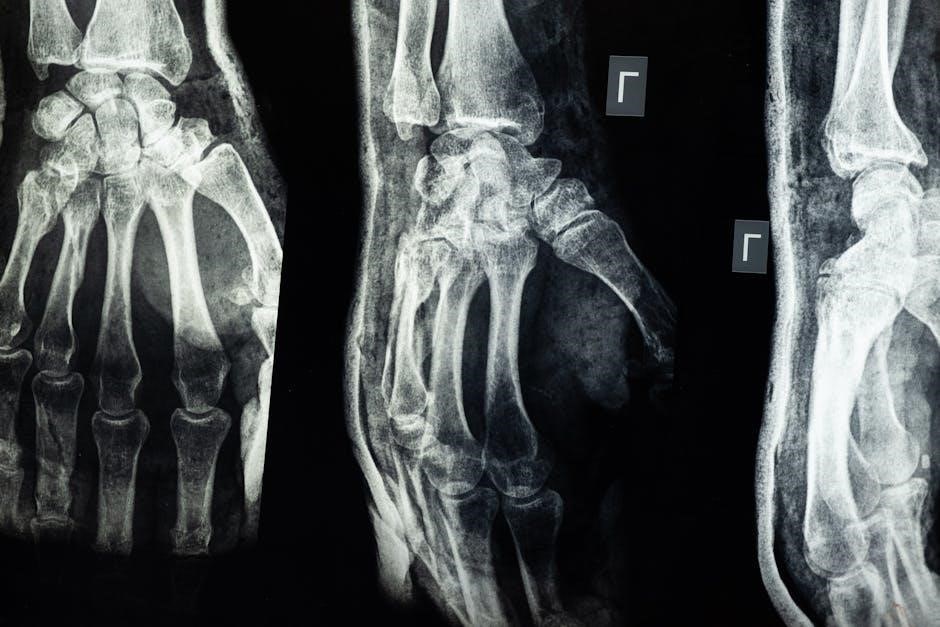
Understanding bone fractures is crucial, as they range from simple cracks to complete breaks; comprehensive types of bone fracture pdf guides are available.
What is a Bone Fracture?
A bone fracture, frequently termed a broken bone, arises when the force exerted upon a bone surpasses its inherent strength, leading to disruption. This disruption can manifest in various forms, detailed within types of bone fracture pdf resources. Bones provide structural support, protect organs, and facilitate movement, but are susceptible to breakage from trauma, overuse, or underlying conditions. Recognizing a fracture involves symptoms like pain, swelling, deformity, and inability to bear weight.
Fractures aren’t always complete breaks; they can range from hairline cracks to shattering. Understanding the specific type of fracture—as outlined in available guides—is vital for appropriate medical intervention and optimal healing. Early diagnosis and proper treatment are paramount to restoring bone function and minimizing long-term complications.
The Importance of Fracture Classification
Accurate fracture classification is paramount in orthopedic medicine, directly influencing treatment strategies and predicting patient outcomes. Detailed types of bone fracture pdf documents emphasize this point. Categorizing fractures – by skin penetration, fracture pattern, or injury mechanism – allows clinicians to determine the stability of the break and the potential for complications. This classification guides decisions regarding immobilization, surgical intervention, and rehabilitation protocols.
A precise understanding of the fracture type, as detailed in comprehensive guides, ensures appropriate management, minimizing the risk of malunion, nonunion, or long-term disability. Consistent classification also facilitates communication among healthcare professionals and aids in research efforts focused on improving fracture care.

Types of Bone Fractures Based on Skin Penetration
Fractures are broadly categorized as either closed, where the skin remains intact, or open, involving skin penetration; types of bone fracture pdf details this.
Closed (Simple) Fracture
A closed, or simple, fracture signifies that the broken bone hasn’t pierced the skin. This type doesn’t expose the bone to external contaminants, reducing infection risk. However, significant pain, swelling, and deformity are still present. Diagnosis typically involves a physical exam and imaging techniques like X-rays, readily detailed in types of bone fracture pdf resources.
Treatment often involves immobilization using casts or splints to allow the bone to heal naturally. Pain management is also crucial. While generally less severe than open fractures, closed fractures still require prompt medical attention to ensure proper alignment and healing. Complications, though less common, can include delayed union or non-union if not adequately managed, as explained in comprehensive fracture guides.
Open (Compound) Fracture
An open, or compound, fracture is a severe injury where the broken bone protrudes through the skin, or a wound connects to the fracture site. This creates a high risk of infection due to external contamination, demanding immediate medical intervention. Detailed illustrations and treatment protocols are available in types of bone fracture pdf documents.
Treatment typically involves surgical intervention to clean the wound, realign the bone fragments, and stabilize the fracture with internal or external fixation. Intravenous antibiotics are crucial to prevent infection. Open fractures often require more extensive rehabilitation compared to closed fractures. Prompt and aggressive management is vital to minimize complications like osteomyelitis and non-union, as thoroughly outlined in medical fracture guides.

Fracture Classification by Fracture Pattern
Fracture patterns—transverse, spiral, comminuted, oblique, and avulsion—are key to diagnosis and treatment planning; explore detailed visuals in types of bone fracture pdf.
Transverse Fracture
A transverse fracture occurs when the break in the bone is a straight line across its axis, perpendicular to the long axis. This fracture type often results from a direct, forceful impact. Visual aids within types of bone fracture pdf resources clearly demonstrate this distinct 90-degree angle break.
Diagnosis typically involves X-rays, revealing the clean, horizontal fracture line. Treatment varies based on severity, ranging from immobilization with a cast to surgical intervention with plates and screws for stabilization. Understanding the mechanism of injury is crucial for proper management. These fractures are relatively stable compared to others, but displacement can still occur, necessitating reduction before healing. Detailed diagrams in available PDFs illustrate the characteristics and treatment approaches for transverse fractures.
Spiral Fracture
Spiral fractures are characterized by a break that spirals around the bone, resembling a twisted pattern. This injury typically occurs due to a twisting force applied to the limb, often seen in sports injuries or falls involving rotation. Types of bone fracture pdf guides showcase the distinctive helical appearance of these breaks on radiographic images.
The severity can range from stable, non-displaced fractures to unstable, significantly displaced ones. Treatment often involves reduction – realigning the bone fragments – followed by immobilization with a cast or splint. In complex cases, surgical fixation with rods or plates may be required. Recognizing the rotational mechanism is key to understanding the fracture pattern. Detailed illustrations within the PDFs help visualize the forces involved and appropriate treatment strategies.
Comminuted Fracture
A comminuted fracture involves the bone shattering into three or more pieces. This is typically caused by high-impact trauma, such as a motor vehicle accident or a significant fall. Types of bone fracture pdf resources emphasize the complexity of these injuries, often requiring extensive surgical intervention. The numerous bone fragments complicate the healing process and increase the risk of complications.
Treatment usually necessitates open reduction and internal fixation (ORIF), where the fragments are meticulously realigned and secured with plates, screws, or rods. These fractures often result in significant pain, swelling, and loss of function. Rehabilitation is a prolonged process, focusing on restoring range of motion and strength. Detailed radiographic examples in the PDFs illustrate the fragmented nature of these severe breaks.
Impacted Fracture
An impacted fracture occurs when one fragment of a broken bone is driven into another. This often happens with long bones, like the femur, due to axial loading. Types of bone fracture pdf guides detail how this “telescoping” effect can shorten the limb and cause significant instability. While not always requiring immediate surgery, impacted fractures frequently benefit from reduction – realigning the bone fragments;
Treatment strategies depend on the severity and location of the impact. Closed reduction, manipulating the bone externally, may be sufficient in some cases. However, ORIF (Open Reduction and Internal Fixation) is often necessary to ensure stable healing, particularly if the impact is severe or unstable. Rehabilitation focuses on regaining strength and mobility, with careful monitoring for complications like malunion.
Avulsion Fracture
An avulsion fracture results when a tendon or ligament pulls a small piece of bone away from the main bone mass. Commonly occurring near joints – fingers, hips, feet, and ankles are frequent sites – these fractures happen due to sudden, forceful muscle contractions. Types of bone fracture pdf resources illustrate how this pulling force overcomes the bone’s tensile strength.
Diagnosis often involves imaging, like X-rays, to confirm the small bone fragment separation. Treatment varies based on severity; minor avulsions may respond to immobilization with a cast or splint; More significant avulsions might require surgical intervention to reattach the fragment, ensuring proper joint function. Rehabilitation is key, focusing on restoring range of motion and strength.
Oblique Fracture
An oblique fracture is characterized by a break that occurs at an angle across the bone, not perpendicular to its long axis. This fracture type typically results from a twisting force or angled impact. Detailed types of bone fracture pdf guides visually demonstrate the angled break pattern, differentiating it from transverse fractures. The severity can vary greatly, influencing treatment approaches.
Diagnosis relies on X-rays, which clearly reveal the angled fracture line. Treatment often involves immobilization with a cast or splint to maintain alignment during healing. In more complex cases, particularly with significant displacement, surgical intervention with plates, screws, or rods may be necessary to stabilize the bone. Rehabilitation exercises are crucial post-immobilization to regain strength and function.

Specific Fracture Types & Locations
Specific fractures, like stress or greenstick, occur in distinct areas; accessing detailed types of bone fracture pdf resources aids in understanding these localized breaks.
Stress Fracture
Stress fractures represent tiny cracks in the bone, often developing from repetitive force or overuse, rather than a single traumatic event. These are frequently seen in weight-bearing bones of the foot and lower leg, particularly among athletes or individuals undergoing intense training regimens. Unlike acute fractures, stress fractures accumulate over time, making early diagnosis challenging.
Detailed types of bone fracture pdf guides emphasize that pain typically begins as a mild ache, gradually worsening with activity and subsiding with rest. Imaging techniques, such as bone scans or MRIs, are often required to confirm the diagnosis, as standard X-rays may not initially reveal the fracture. Proper rest, activity modification, and supportive care are crucial for healing, preventing progression to a complete fracture. Understanding the biomechanics and risk factors, as outlined in these resources, is key to effective prevention and management.
Greenstick Fracture
Greenstick fractures are incomplete fractures where the bone bends and cracks, instead of breaking completely. This type is most common in children, whose bones are more flexible due to a higher cartilage content. The name derives from the analogy to trying to break a fresh, “green” twig – it bends before snapping.
Types of bone fracture pdf resources illustrate that these fractures typically occur on the convex side of the bone. While generally less severe than complete fractures, they still require immobilization, often with a cast, to ensure proper healing. Diagnosis is usually confirmed with X-rays. Understanding the unique characteristics of pediatric fractures, as detailed in these guides, is vital for appropriate treatment and minimizing long-term complications, ensuring optimal bone development in growing children.
Compression Fracture
Compression fractures typically occur in the vertebrae, often due to osteoporosis or significant trauma. These fractures involve the collapse of a bone, rather than a break through the bone itself. Types of bone fracture pdf materials detail how these fractures most commonly affect the elderly, but can also occur in younger individuals with weakened bones.
Symptoms can range from mild back pain to severe, debilitating discomfort. Diagnosis usually involves X-rays or MRI scans to visualize the vertebral collapse. Treatment options vary depending on severity, ranging from pain management and bracing to vertebroplasty or kyphoplasty to stabilize the fracture. Detailed guides emphasize the importance of addressing underlying conditions like osteoporosis to prevent future compression fractures and maintain spinal health.
Pathologic Fracture
Pathologic fractures occur when a bone breaks due to a pre-existing condition weakening the bone, rather than from a major injury. Types of bone fracture pdf resources highlight that these fractures are often linked to diseases like osteoporosis, bone cancer, or infections that compromise bone integrity. The bone essentially fractures under normal stress.
Symptoms are similar to other fractures – pain, swelling, and limited movement – but the underlying cause requires investigation. Diagnosis involves imaging tests to identify the weakening condition alongside the fracture itself. Treatment focuses on both stabilizing the fracture and addressing the underlying disease. Early detection and management of the primary condition are crucial to prevent further fractures and improve patient outcomes, as detailed in comprehensive fracture guides.
Periprosthetic Fracture
Periprosthetic fractures are breaks that occur around a prosthetic implant, such as a hip or knee replacement. Types of bone fracture pdf documents explain these are becoming increasingly common with the rise in joint replacement surgeries. Classifications help clinicians determine the best treatment approach, considering factors like fracture location relative to the implant and the implant’s stability.
Treatment options range from conservative management with bracing to complex surgical revisions, potentially involving implant replacement. The choice depends on the fracture’s severity, patient health, and bone quality. Careful evaluation and planning are essential for successful outcomes. Numerous conservative and surgical options exist, but no single method has proven definitively superior, as detailed in specialized orthopedic guides.
Fracture Classification by Mechanism of Injury
Fracture classification by injury mechanism distinguishes between traumatic, fatigue, and pathological fractures; detailed types of bone fracture pdf resources explain these distinctions.
Traumatic Fractures
Traumatic fractures result from a sudden, impactful force applied to a normally healthy bone – think falls, vehicle accidents, or direct blows. These injuries overwhelm the bone’s inherent strength, causing it to break. Understanding the specific force involved is key to proper diagnosis and treatment planning. Resources like comprehensive types of bone fracture pdf guides detail the various patterns traumatic forces can create, including transverse, spiral, and comminuted fractures.
The severity of a traumatic fracture depends on the amount of force and the bone’s overall health. Clinicians assess the fracture’s stability and displacement to determine the best course of action, ranging from immobilization with a cast to surgical intervention. Detailed imaging, often coupled with information from types of bone fracture pdf materials, aids in accurate assessment.
Fatigue Fractures
Fatigue fractures, also known as stress fractures, develop from repetitive, low-impact forces applied over time. Unlike traumatic fractures caused by a single event, these occur when the bone undergoes repeated stress, exceeding its ability to repair itself. Athletes, particularly runners and dancers, are prone to fatigue fractures, often in the weight-bearing bones of the lower leg and foot. Detailed types of bone fracture pdf resources illustrate the subtle radiographic signs often associated with these injuries.
Early diagnosis is crucial, as continued activity can worsen the fracture. Treatment typically involves rest, immobilization, and gradual return to activity. Understanding the biomechanics of the activity and addressing contributing factors, like improper footwear or training techniques, are essential for preventing recurrence. Types of bone fracture pdf guides can help visualize the progression of these fractures.
Pathological Fractures (Due to Disease)
Pathological fractures occur when bone is weakened by an underlying disease process, making it susceptible to fracture with minimal trauma. Conditions like osteoporosis, bone cancer (primary or metastatic), infections, and certain genetic disorders can compromise bone integrity. These fractures aren’t caused by significant external force, but rather by the bone’s diminished strength. Comprehensive types of bone fracture pdf materials often dedicate sections to identifying fractures stemming from systemic diseases.
Diagnosis requires identifying and addressing the underlying pathology. Treatment focuses on stabilizing the fracture, managing the disease, and preventing further bone loss. Types of bone fracture pdf resources highlight the characteristic appearances of pathological fractures on imaging studies, aiding in accurate diagnosis and appropriate management strategies. Early intervention is vital to improve patient outcomes.

Fracture Severity & Complexity
Fracture severity, ranging from stable to unstable, and displacement status, are key classifications detailed in types of bone fracture pdf guides.
Stable Fracture
A stable fracture signifies that the broken bone ends remain adequately aligned and minimally displaced. This type generally doesn’t require extensive intervention, such as surgery, to realign the fragments. Often, immobilization via a cast or splint is sufficient to facilitate natural healing processes. Types of bone fracture pdf resources emphasize that stable fractures typically result from lower-energy impacts.
However, it’s crucial to remember that ‘stable’ doesn’t equate to ‘painless’ – discomfort is still expected. Monitoring for any signs of displacement during the healing phase is vital. Detailed types of bone fracture pdf documents will illustrate the characteristics of stable fractures, aiding in accurate diagnosis and appropriate treatment planning. These guides often include radiographic examples for clarity.
Unstable Fracture
An unstable fracture denotes a break where the bone fragments have significant displacement or a high propensity to displace further. These fractures typically necessitate more aggressive intervention, often involving surgical fixation – such as plates, screws, or rods – to restore proper alignment and stability. Types of bone fracture pdf materials clearly demonstrate the need for intervention in these cases.
High-energy trauma frequently causes unstable fractures. Detailed types of bone fracture pdf guides highlight that these breaks disrupt the surrounding soft tissues, compromising the bone’s inherent ability to heal correctly without external support. Careful post-operative rehabilitation is crucial to regain full function. Ignoring instability can lead to malunion or nonunion, requiring further corrective procedures.
Displaced Fracture
A displaced fracture signifies that the broken bone fragments have moved from their normal anatomical alignment. This separation can range from minor shifts to complete dislocations, impacting the bone’s ability to heal properly without intervention. Types of bone fracture pdf resources visually illustrate the degree of displacement, aiding in treatment planning.
Treatment for displaced fractures often involves reduction – a procedure to realign the bone fragments – followed by immobilization with a cast or splint. In some cases, surgical intervention may be necessary to achieve and maintain proper alignment. Types of bone fracture pdf guides emphasize that the extent of displacement directly influences the complexity of treatment and recovery. Accurate diagnosis and prompt management are vital to minimize long-term complications.
Non-Displaced Fracture
A non-displaced fracture indicates the broken bone ends remain in their proper anatomical alignment; the bone hasn’t shifted out of position. While still painful, these fractures generally have a more favorable prognosis compared to displaced fractures. Types of bone fracture pdf materials often showcase radiographic examples to clearly demonstrate this alignment.
Treatment typically involves immobilization – using a cast, splint, or brace – to allow the bone to heal naturally. Unlike displaced fractures, surgical intervention is often unnecessary. Types of bone fracture pdf guides highlight the importance of consistent immobilization and following medical advice for optimal healing. Monitoring for any signs of displacement during the healing process is crucial, ensuring the fracture remains stable throughout recovery.

Additional Fracture Classifications
Further categorizations exist, including complete versus incomplete fractures and segmental fractures, detailed in types of bone fracture pdf resources for clarity.
Complete Fracture
A complete fracture signifies a break that extends entirely across the bone, separating it into two or more distinct pieces. This contrasts with incomplete fractures, where the bone remains partially connected. Detailed illustrations within types of bone fracture pdf guides clearly demonstrate this distinction. Diagnosis typically involves radiographic imaging, such as X-rays, to visualize the full extent of the break.
Treatment approaches vary based on fracture location, severity, and patient factors, ranging from immobilization with casts or splints to surgical intervention involving internal fixation devices like plates, screws, or rods. Understanding the complete nature of the break is paramount for appropriate management, as outlined in comprehensive fracture classification resources and types of bone fracture pdf documents.
Incomplete Fracture

An incomplete fracture doesn’t traverse the entire width of the bone, meaning the bone isn’t broken all the way through. These are more common in children due to their more flexible bones – specifically, greenstick fractures fall into this category. Types of bone fracture pdf resources often dedicate sections to differentiating incomplete versus complete breaks, using illustrative diagrams.
Diagnosis relies on imaging techniques, though sometimes clinical presentation is sufficient. Treatment generally involves immobilization, like casting, to allow the bone to heal without surgical intervention. However, the specific approach depends on the fracture’s location and stability, as detailed in specialized types of bone fracture pdf guides intended for medical professionals and students alike.
Segmental Fracture
A segmental fracture represents a more complex injury where the bone is broken in two places, creating a distinct, isolated segment of bone between the fracture lines. This differs from a simple fracture as there are multiple fracture lines present. Detailed types of bone fracture pdf materials emphasize the increased instability associated with this fracture pattern, often requiring more robust stabilization methods.
Treatment typically involves surgical intervention, such as internal fixation with plates and screws, to realign and secure the bone fragments. Understanding the biomechanics of segmental fractures is crucial for successful healing, and comprehensive types of bone fracture pdf guides provide in-depth analysis of these principles, alongside post-operative rehabilitation protocols.
Resources for Further Information (PDFs & Guides)
For a deeper understanding of types of bone fracture pdf documentation is readily available from numerous medical sources. The American Academy of Orthopaedic Surgeons (AAOS) offers extensive guides detailing fracture classification, treatment protocols, and rehabilitation exercises. The Orthopedic Trauma Association (OTA) provides specialized resources, including detailed fracture classification systems and research articles.
Several university hospitals and medical centers also publish comprehensive types of bone fracture pdf materials for both healthcare professionals and patients. These resources often include illustrative diagrams, case studies, and explanations of various surgical techniques. Searching for “fracture classification pdf” or “orthopedic trauma guide pdf” will yield a wealth of information, ensuring access to current best practices and detailed anatomical insights.