
Ashtanga Yoga Primary Series: A Comprehensive Guide
Numerous PDF resources detail the Ashtanga Primary Series, offering charts and sequences. These guides, like those from YOGATEKET and Ashtanga Yoga Canada,
provide accessible learning tools for practitioners of all levels.
What is Ashtanga Yoga?
Ashtanga Yoga is a dynamic and physically demanding yoga system, rooted in ancient yoga traditions. It’s characterized by a specific sequence of postures, synchronized with breath – a practice often referred to as vinyasa. This creates a flowing, meditative experience. The Primary Series, or Yoga Chikitsa, forms the foundation of the entire Ashtanga system.
Many resources, available as PDF downloads, illustrate this structured approach. These guides, like the one from Spiritual Practice MindBody Interventions detailing Adam Keen’s teachings, emphasize the precise order of asanas (poses) and the importance of ujjayi breath.
Omstars describes the Primary Series as a foundational sequence. It’s not simply about physical exercise; it’s a holistic practice designed to purify the body and mind. PDF charts, such as those offered by Tania Kemou Yoga, serve as valuable “cheat sheets” for beginners, visually mapping the entire sequence for easy reference during practice.
The Origins of Ashtanga Yoga
Ashtanga Yoga’s lineage traces back to the teachings of Vamana Rishi, as revealed in the Yoga Korunta, an ancient text. However, the modern system we know today was systematized by Tirumalai Krishnamacharya in the early 20th century. He, in turn, passed his knowledge onto his students, most notably Pattabhi Jois.
Pattabhi Jois is credited with developing and popularizing the six series of Ashtanga Yoga, including the Primary Series (Yoga Chikitsa). PDF guides often acknowledge this historical context, referencing the teachings passed down from Jois and his lineage, like those detailed by Adam Keen in a specific PDF resource.
Understanding this history is crucial for appreciating the depth and integrity of the practice. Many downloadable charts and sequences, available online, serve as a visual representation of this carefully preserved tradition. Resources like those from Ashtanga Yoga Canada provide a free PDF outlining the series, connecting practitioners to this rich heritage.
The Six Series of Ashtanga Yoga
Ashtanga Yoga comprises six progressive series, each building upon the previous one in terms of difficulty and complexity. The Primary Series, Yoga Chikitsa, focuses on detoxification and alignment. Subsequent series – Intermediate, Advanced A, B, C, and D – introduce more challenging postures and deeper energetic work.
PDF resources frequently illustrate the sequential nature of these series. Charts, like the one referenced by YOGATEKET, often depict the Primary Series as a starting point for dedicated practitioners. While complete PDFs of the advanced series are less common, many guides offer overviews of their general structure.
It’s important to note that mastering each series requires consistent practice and guidance from a qualified teacher. Downloadable PDFs can be valuable tools for reference, but they shouldn’t replace personalized instruction. The progressive nature ensures a safe and effective journey through the full scope of Ashtanga Yoga.
Understanding the Primary Series (Yoga Chikitsa)
PDF guides from sources like Spiritual Practice MindBody Interventions detail Yoga Chikitsa, outlining postures, breathing, and sequencing for this foundational series.
The Meaning of Yoga Chikitsa
Yoga Chikitsa, translating to “Yoga Therapy,” is the first series within the Ashtanga system, and its purpose extends far beyond simply physical exercise.
As detailed in numerous PDF resources and guides – such as those offered by Adam Keen, based on Sharathji Jois’s teachings – Yoga Chikitsa is designed to systematically work through the body, addressing imbalances and creating a foundation of health.
It’s a self-healing practice, utilizing specific postures (asanas) linked with breath (ujjayi pranayama) and focused gaze (drishti) to purify and revitalize internal systems.
The sequence isn’t arbitrary; each pose counteracts the negative effects of modern lifestyle habits – prolonged sitting, repetitive movements, and mental stress.
Through consistent practice, guided by PDF charts and instructions, practitioners aim to build strength, flexibility, and awareness, ultimately fostering a deeper connection between body, mind, and spirit.
It’s a therapeutic approach, laying the groundwork for more advanced Ashtanga series.
Benefits of Practicing the Primary Series
Consistent practice of the Ashtanga Primary Series, as outlined in readily available PDF guides, yields a multitude of benefits extending beyond physical fitness.
The sequence systematically strengthens and tones muscles, improves flexibility, and enhances posture, counteracting the effects of sedentary lifestyles.
PDF resources highlight how the linked breathwork (ujjayi pranayama) calms the nervous system, reducing stress and anxiety, while promoting mental clarity.
Yoga Chikitsa detoxifies the body through increased circulation and stimulation of internal organs, improving digestion and boosting immunity.
Furthermore, the focused concentration (drishti) cultivates mindfulness and self-awareness, fostering a deeper connection to one’s inner self.
Regular practice, supported by PDF charts, builds discipline, perseverance, and a sense of accomplishment, positively impacting overall well-being. It’s a holistic practice for body and mind.
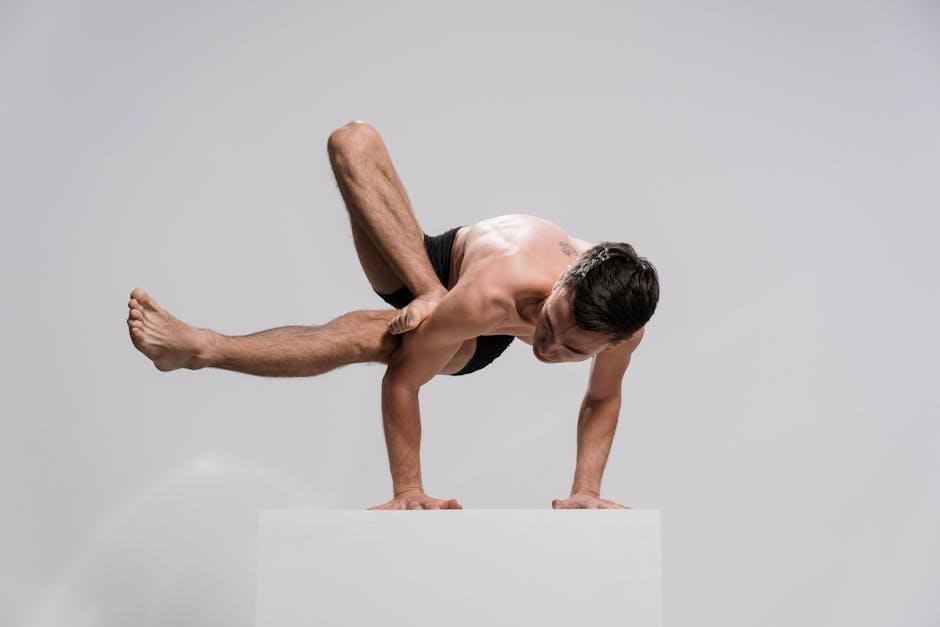
The Ashtanga Primary Series Sequence
Detailed PDF charts illustrate the precise order of poses, starting with Sun Salutations, progressing through standing and seated postures, and concluding with a finishing sequence.
Surya Namaskara A & B (Sun Salutations)
Sun Salutations, or Surya Namaskara, form the dynamic opening to the Ashtanga Primary Series. PDF guides consistently emphasize their crucial role in warming the body and establishing the ujjayi breath.
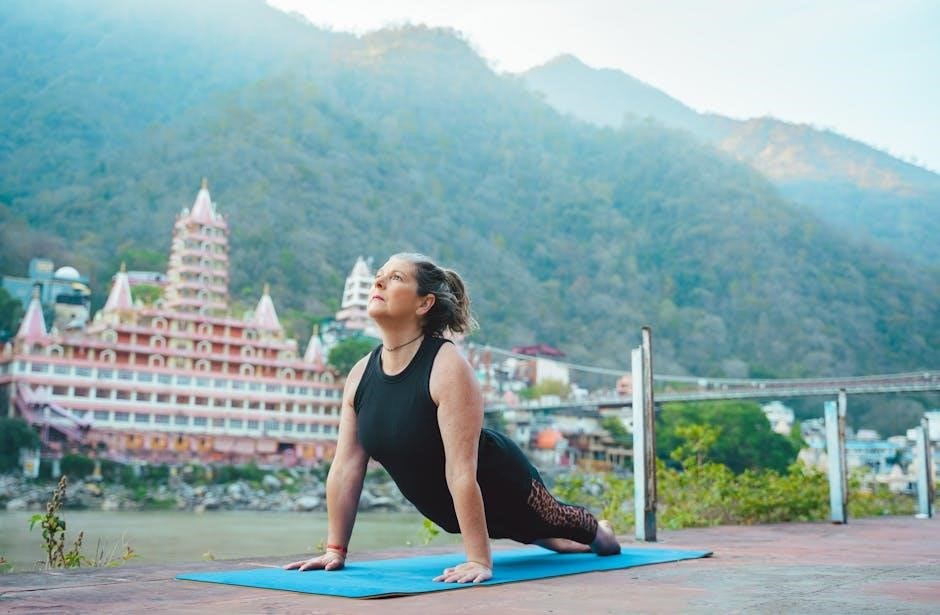
Surya Namaskara A is the foundational sequence, often repeated five times initially. It includes Tadasana (Mountain Pose), Uttanasana (Forward Bend), Ardha Uttanasana (Halfway Lift), Chaturanga Dandasana (Low Plank), Urdhva Mukha Svanasana (Upward-Facing Dog), and Adho Mukha Svanasana (Downward-Facing Dog).
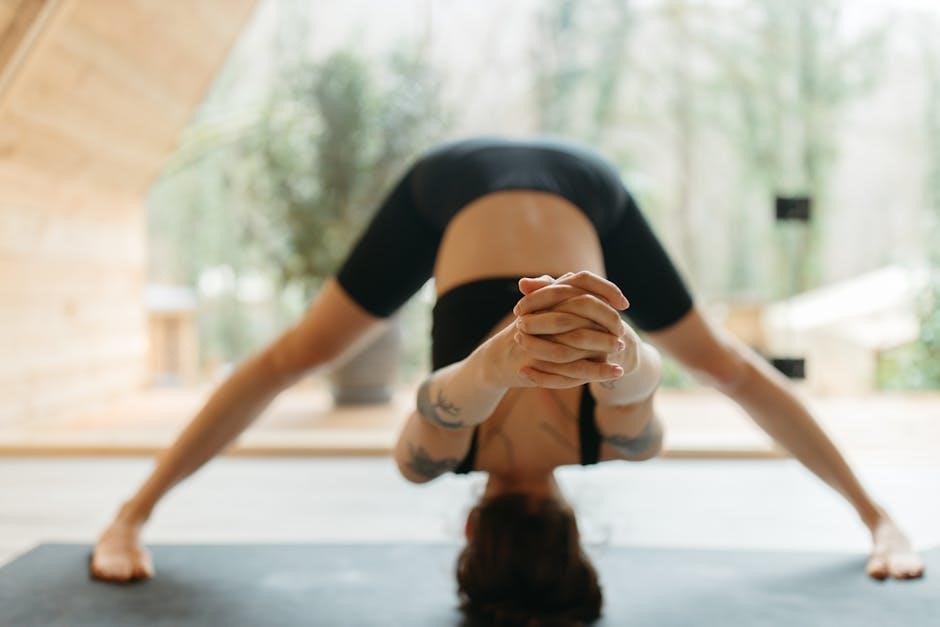
Surya Namaskara B builds upon A, adding Chair Pose (Utkatasana) and a warrior-inspired jump back and forward. Many downloadable PDF resources, like those available from yoga studios, visually break down each transition. Practitioners often begin their practice with several rounds of these salutations, preparing both physically and mentally for the more challenging poses ahead. The consistent repetition, as shown in sequence charts, builds heat and stamina.
Standing Poses – The Foundation
The standing poses in the Ashtanga Primary Series, detailed in numerous PDF guides, establish a strong foundation for the entire practice. They build strength, stability, and body awareness. These poses are often the first encountered after the Sun Salutations, preparing the body for deeper stretches and more complex postures.
Tadasana (Mountain Pose), seemingly simple, is emphasized in PDF charts as the alignment key for all standing poses. It teaches proper posture and grounding. Uttanasana (Standing Forward Bend) follows, lengthening the spine and hamstrings.
Ardha Uttanasana (Halfway Lift), a crucial transition, is often illustrated in PDF sequences to demonstrate correct back alignment. These foundational poses, when practiced with mindful breath, create a solid base. PDF resources from sources like Tania Kemou Yoga often include visual cues for proper form, ensuring practitioners build a safe and effective practice. Mastering these poses is essential before progressing.
Tadasana (Mountain Pose)
Tadasana, or Mountain Pose, is the foundational standing posture in the Ashtanga Primary Series, frequently highlighted in PDF guides as the cornerstone of alignment. Though appearing simple, it demands precise engagement of muscles throughout the body. PDF charts often emphasize distributing weight evenly through all four corners of the feet, grounding the energy.
Proper alignment, as detailed in resources like those from Adam Keen’s teachings, involves drawing the tailbone down, lifting the chest, and relaxing the shoulders. The gaze is soft and forward.
PDF resources illustrate subtle cues – engaging the core, lengthening the spine – to achieve optimal form. Tadasana isn’t merely standing; it’s an active pose cultivating awareness and stability. It serves as the reference point for all subsequent standing asanas, ensuring correct posture and preventing injury. Mastering Tadasana is crucial before advancing in the sequence.
Uttanasana (Standing Forward Bend)
Uttanasana, the Standing Forward Bend, directly follows Tadasana in the Ashtanga Primary Series, frequently depicted in PDF sequences. These guides emphasize a smooth transition, maintaining spinal length as you hinge from the hips. Many PDF charts illustrate variations – hands to the floor, shins, or ankles – adapting to individual flexibility.
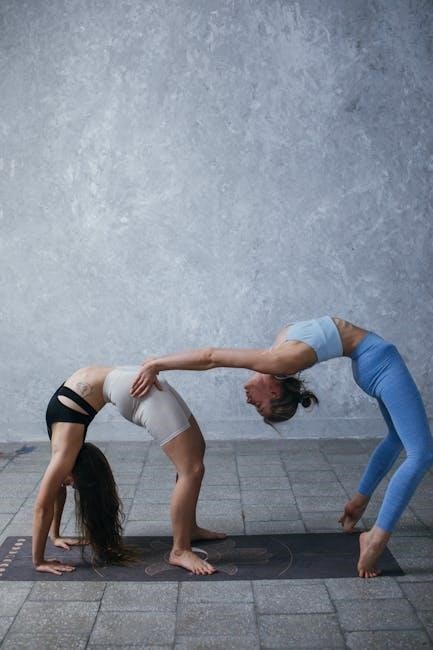
Proper form, as detailed in resources like those from Ashtanga Yoga Canada, involves a straight back (or a slight rounding if hamstrings are tight) and a relaxed neck. The head hangs heavy, releasing tension.
PDFs often highlight the importance of engaging the core to support the spine and prevent overextension. Beginners may use bent knees to maintain a flat back. Uttanasana stretches the hamstrings, calves, and spine, promoting flexibility and calming the nervous system. It prepares the body for deeper forward bends later in the series, building strength and awareness.
Ardha Uttanasana (Halfway Lift)
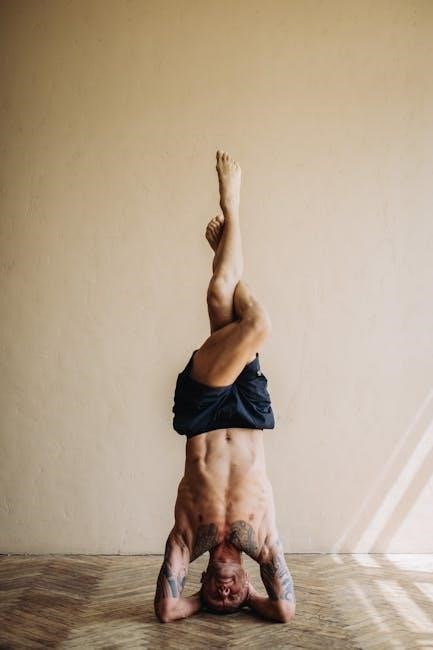
Ardha Uttanasana, or Halfway Lift, is a crucial transitional pose in the Ashtanga Primary Series, consistently illustrated in downloadable PDF guides. These resources emphasize maintaining a flat back, lengthening the spine, and gazing slightly forward. It’s presented as a counterpoint to the deeper stretch of Uttanasana.
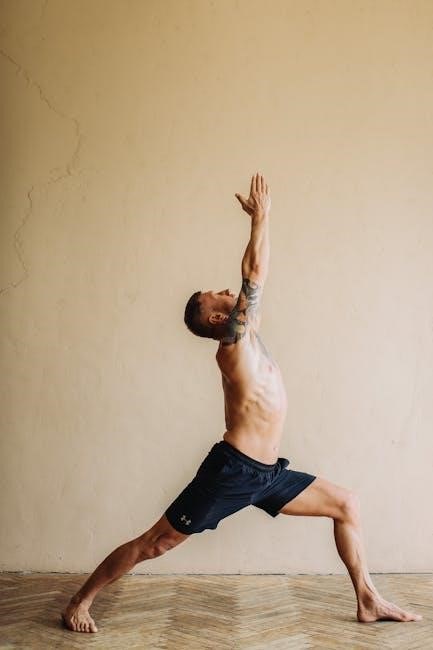
PDF charts often detail hand placement – fingertips on the floor or shins – and the engagement of core muscles to support the back. The pose isn’t about how low you go, but maintaining spinal alignment.
Many guides highlight the importance of breathing deeply into the pose, creating space between the vertebrae. Ardha Uttanasana strengthens the back muscles and prepares the body for the subsequent poses. It builds core stability and improves posture, acting as a bridge between forward bends and standing poses, as shown in various Ashtanga PDF sequences.
Seated Poses – Building Strength & Flexibility
Ashtanga Primary Series PDF guides meticulously detail the seated poses, emphasizing their role in building both strength and flexibility. These sequences, often based on teachings from Mysore, transition from standing postures to deeper hip openers and spinal twists.
PDF charts illustrate poses like Paschimottanasana (Seated Forward Bend) and Purvottanasana (Reverse Plank Pose), providing visual cues for proper alignment. They often include breathing instructions – ujjayi breath – to deepen the stretch and enhance focus.
These resources highlight the importance of maintaining a straight spine in forward bends and engaging core muscles for stability. The seated poses are presented as a vital component of Yoga Chikitsa, the therapeutic aspect of the Primary Series, as detailed in documents from Spiritual Practice MindBody Interventions. They prepare the body for the finishing sequence.
Paschimottanasana (Seated Forward Bend)
Ashtanga Primary Series PDF guides consistently feature Paschimottanasana as a cornerstone seated pose, emphasizing its profound impact on hamstring flexibility and spinal extension. PDF charts from sources like Tania Kemou Yoga visually demonstrate the correct alignment – a straight spine maintained throughout the forward fold.
These resources detail the importance of initiating the fold from the hip crease, rather than rounding the back. Practitioners are guided to use ujjayi breath to deepen the stretch with each exhale, and to avoid forcing the pose.
Documents, such as those from Adam Keen’s teachings detailed in Spiritual Practice MindBody Interventions, often include modifications for beginners, like bending the knees or using a strap. The PDF guides stress the therapeutic benefits of Paschimottanasana, contributing to the Yoga Chikitsa aspect of the series.
Purvottanasana (Reverse Plank Pose)
Ashtanga Primary Series PDF resources highlight Purvottanasana as a challenging counter-pose to Paschimottanasana, building upper body strength and opening the chest. PDF charts, like those available for free download, illustrate the correct form: shoulders under the ears, hands and feet firmly grounded, and a straight line from knees to head.
These guides emphasize engaging the core and glutes to lift the hips, avoiding compression in the lower back. Documents detailing Adam Keen’s teachings often specify variations for different levels, such as keeping the knees bent or lifting one leg at a time.
PDFs consistently mention the importance of breath synchronization – inhaling to lift, exhaling to maintain the pose. The therapeutic benefits, including spinal strengthening and improved posture, are frequently noted within the Ashtanga Primary Series guides.
Finishing Sequence – Cooling Down & Integration
Ashtanga Primary Series PDF guides detail the finishing sequence as crucial for grounding and integrating the practice. Charts from sources like Tania Kemou Yoga often include Kapotasana (Pigeon Pose) and Supta Kurmasana (Reclining Tortoise Pose) as key components.
These documents emphasize the importance of holding each pose for a specific number of breaths, promoting deep relaxation and releasing tension. PDFs based on Sharathji Jois’s teachings outline precise instructions for entering and exiting each posture safely.
Resources highlight the sequence’s role in calming the nervous system and preparing the body for rest. Ashtanga Primary Series guides frequently include variations and modifications for practitioners with injuries or limitations, ensuring accessibility for all levels.
Kapotasana (Pigeon Pose)
Ashtanga Primary Series PDF charts consistently feature Kapotasana, or Pigeon Pose, as a pivotal posture within the finishing sequence. Guides from sources like YOGATEKET and those based on Adam Keen’s teachings detail its alignment and benefits.
These documents emphasize the importance of maintaining a straight spine and gently opening the hip flexors. PDFs often illustrate variations, including using a blanket under the hip for support, catering to different levels of flexibility.
Resources highlight Kapotasana’s role in releasing deep-seated tension in the hips and lower back. Ashtanga Primary Series materials frequently include breathing cues to deepen the stretch and promote relaxation. Detailed instructions within these guides ensure practitioners approach the pose safely and effectively.
Supta Kurmasana (Reclining Tortoise Pose)
Ashtanga Primary Series PDF resources consistently showcase Supta Kurmasana as the concluding posture of the finishing sequence. Guides, like those available for free download from Ashtanga Yoga Canada, illustrate the pose’s unique bind and its benefits.
These documents emphasize drawing the knees towards the ears while maintaining a flat back, creating a gentle, restorative stretch. PDF charts often depict the hand positions, guiding practitioners through the arm movements for a secure hold.
Resources highlight Supta Kurmasana’s role in calming the nervous system and promoting deep relaxation after the dynamic practice. Ashtanga Primary Series materials frequently include modifications for those with limited flexibility, such as keeping the knees bent. Detailed instructions within these guides ensure a safe and effective practice of this final, grounding pose.
Resources for Learning the Primary Series
Numerous PDF guides, like those from Tania Kemou Yoga and Ashtanga Yoga Canada, offer printable charts of the sequence. Online resources provide accessible learning!
PDF Guides and Charts
A wealth of downloadable PDF guides and charts are readily available for those seeking to learn or deepen their understanding of the Ashtanga Primary Series. These resources offer a convenient and portable way to study the sequence, often including detailed illustrations and pose breakdowns.
YOGATEKET provides a PDF chart credited to Ryan Spielman, visually representing the entire primary series. Ashtanga Yoga Canada also offers a free downloadable PDF, presenting the sequence in a clear and concise format. Tania Kemou Yoga provides a “cheat sheet” PDF, perfect for beginners, featuring pictures and names of all asanas.
These PDFs are invaluable tools for self-practice, allowing students to reference the correct order of poses and breathing techniques. Adam Keen’s document, based on Sharathji Jois’s teachings, provides a comprehensive outline of the series, detailing postures and breathing instructions. Utilizing these resources can significantly enhance your Ashtanga practice, offering clarity and support on your yoga journey.
Online Courses and Tutorials
Alongside PDF resources, numerous online courses and tutorials offer a dynamic and interactive approach to learning the Ashtanga Primary Series. These platforms provide guided instruction, often including video demonstrations and detailed explanations of each pose and vinyasa.
YOGATEKET highlights the availability of practice-led Ashtanga primary series courses with instructors like Sofia, offering a structured learning experience. Omstars presents the Primary Series, known as Yoga Chikitsa, as a dynamic sequence, ideal for dedicated yoga practitioners seeking a physically demanding practice.
These online platforms often cater to beginners, providing step-by-step guidance and modifications to suit different levels of experience. They allow students to practice at their own pace and receive personalized feedback. Supplementing PDF study with online instruction can create a well-rounded learning experience, fostering a deeper understanding and appreciation for the Ashtanga method.
Finding a Qualified Ashtanga Teacher
While PDF guides and online tutorials provide valuable resources, the guidance of a qualified Ashtanga teacher remains crucial for a safe and effective practice. A knowledgeable instructor can offer personalized adjustments, correct alignment issues, and ensure adherence to the traditional method.
The Ashtanga Yoga Primary Series, as taught by Adam Keen (detailed in a specific PDF document), emphasizes the importance of lineage and proper instruction from Sharathji Jois in Mysore. Seeking a teacher authorized or certified by these established sources ensures authenticity.
A skilled teacher can also help students navigate the challenges of the series, offering modifications and support as needed. They can instill a deeper understanding of the philosophical underpinnings of Ashtanga, complementing the physical practice. Supplementing self-study with in-person instruction fosters a sustainable and enriching yoga journey.